What Diamond Beach Is Actually Like (From Someone Who Guides It)
An Icelandic guide's honest, sensory account of Diamond Beach: what the ice really is, how it shifts with the tide, its colours, and the danger people underestimate.
 By Björn Einarsson, Iceland South Coast & glacier-lagoon tour guide and local specialist
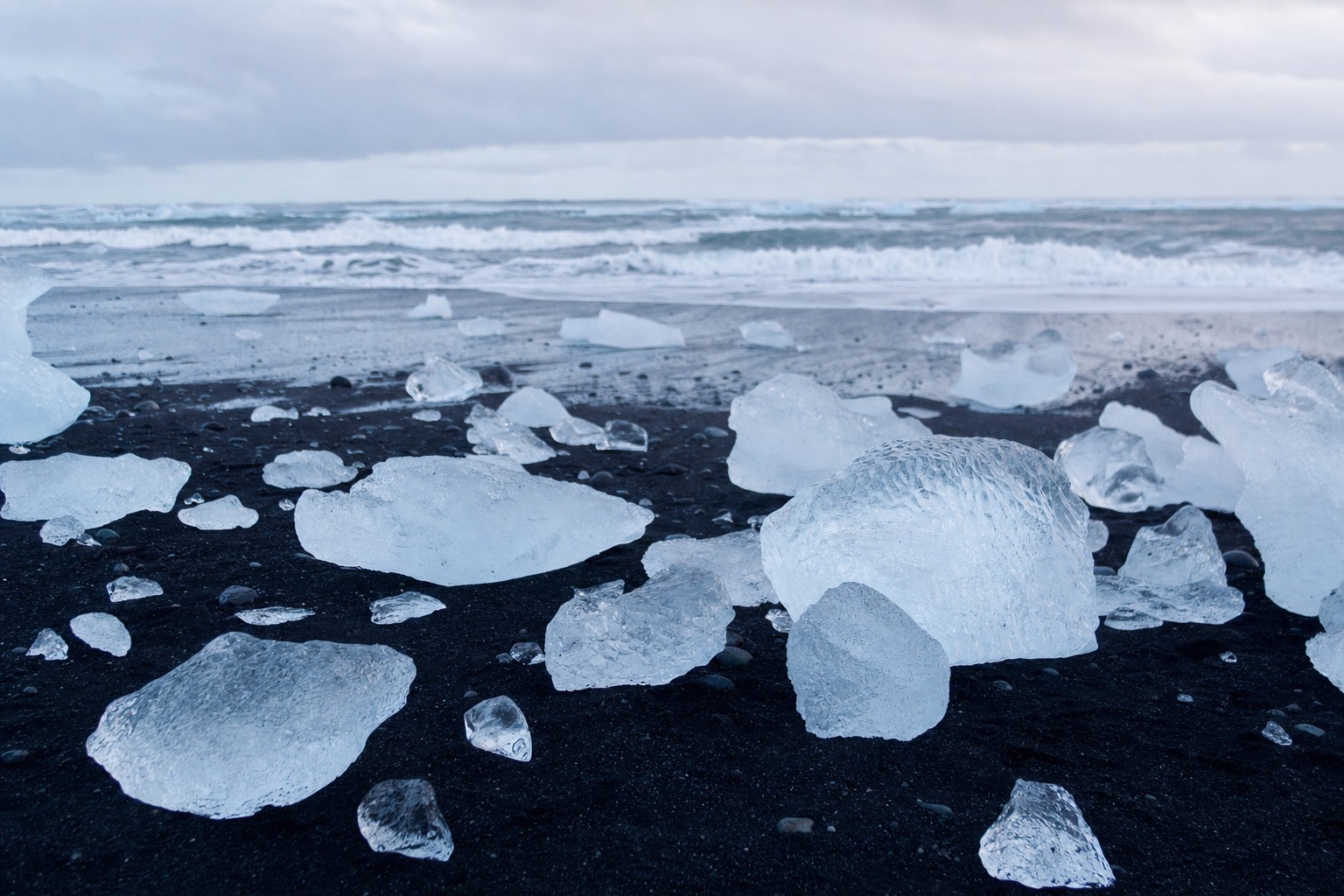
The first thing that gets you is the sound. Not the ocean, though that is loud enough. It is the ice: a faint ticking and cracking as chunks of it settle on the sand and the sun works into old air pockets. I have stood on that black shore in every mood it has, from a calm September dawn to a February gale that flung sleet sideways off the water. People arrive expecting a photograph and find something stranger and more alive. Glacier ice, some of it older than the Icelandic language, sitting on sand made of ground-up volcano, with the North Atlantic trying to take it all back. That is Breiðamerkursandur. Most maps and every visitor call it Diamond Beach.
I want to tell you what it is really like, not the version cropped for a screen. What the ice is, why it looks different every time, and the one thing about this place that I wish more people took seriously before they walked toward the water.
What exactly are the "diamonds" on Diamond Beach?
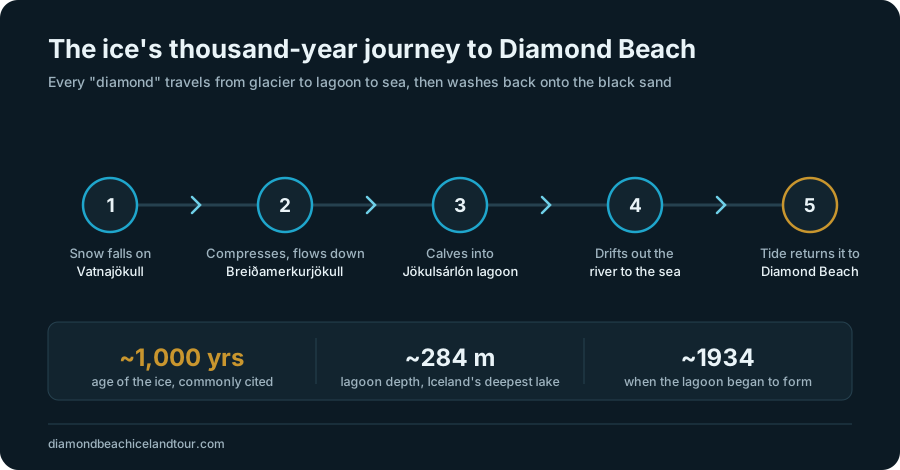
They are not gemstones. Every "diamond" is a piece of glacier ice, calved off Breiðamerkurjökull, floated across Jökulsárlón lagoon, carried out to sea down a short river, then thrown back onto the black sand by the waves. The ice is commonly described as over a thousand years old, compressed so hard and clear that low sun makes it glitter like cut crystal.
I get asked "are the diamonds real?" almost every time, and I love the question because the honest answer is better than the myth. The name is a nickname. The official name is Fellsfjara, the specific stretch of the wider Breiðamerkursandur outwash plain. What you are looking at is ancient freshwater ice, snow that fell on Vatnajökull a millennium ago and got pressed into something dense and blue-hearted over centuries.
The route that ice takes is worth picturing, because it explains everything else about the beach. Snow packs down into glacier ice on Breiðamerkurjökull. The glacier grinds toward the sea and its snout breaks off into Jökulsárlón, a lagoon that only formed around 1934 and has since grown into Iceland's deepest lake, roughly 284 metres down, still expanding as the glacier retreats. You can read the lagoon's formation and growth on the Jökulsárlón entry at Wikipedia if you want the full geological story. The bergs drift the length of the lagoon, slip out the outlet river, and the tide delivers a fraction of them back to the beach. So the "diamonds" are the survivors: the ice that made it all the way to the sea and washed home.
What is Diamond Beach actually like to stand on?
It is smaller, wilder, and colder than the photos suggest. The famous shots are close-ups of a few good pieces. In reality you walk a windswept black beach, find ice scattered in clusters rather than carpeting the whole shore, and feel the wind come straight off glacial water. On a good day it is quietly astonishing. On a bad day it is a car park, a gale, and grey ice.
The sand is a real, deep black, ground basalt from the glacial outwash and old eruptions, and against it clear ice looks impossibly bright. But manage your expectations on scale. This is not an endless field of gems. You will see pieces from the size of a fist to blocks bigger than a person, spread in loose groups where the last high tide left them. Walking between them, the sand firm and wet underfoot, is the part no camera captures.
Weather runs the whole experience. I have brought people here when the sun sat low and every chunk of ice glowed amber and rose from the inside, and I have brought them when horizontal rain sent everyone back to the coach in ten minutes. The wind is the constant. Even in July, standing near water that came off a glacier, you will want more layers than you think. If you are weighing whether the stop earns its place on a long day, I go into that properly in is Diamond Beach worth it.
Why does the ice on the beach change hour to hour?
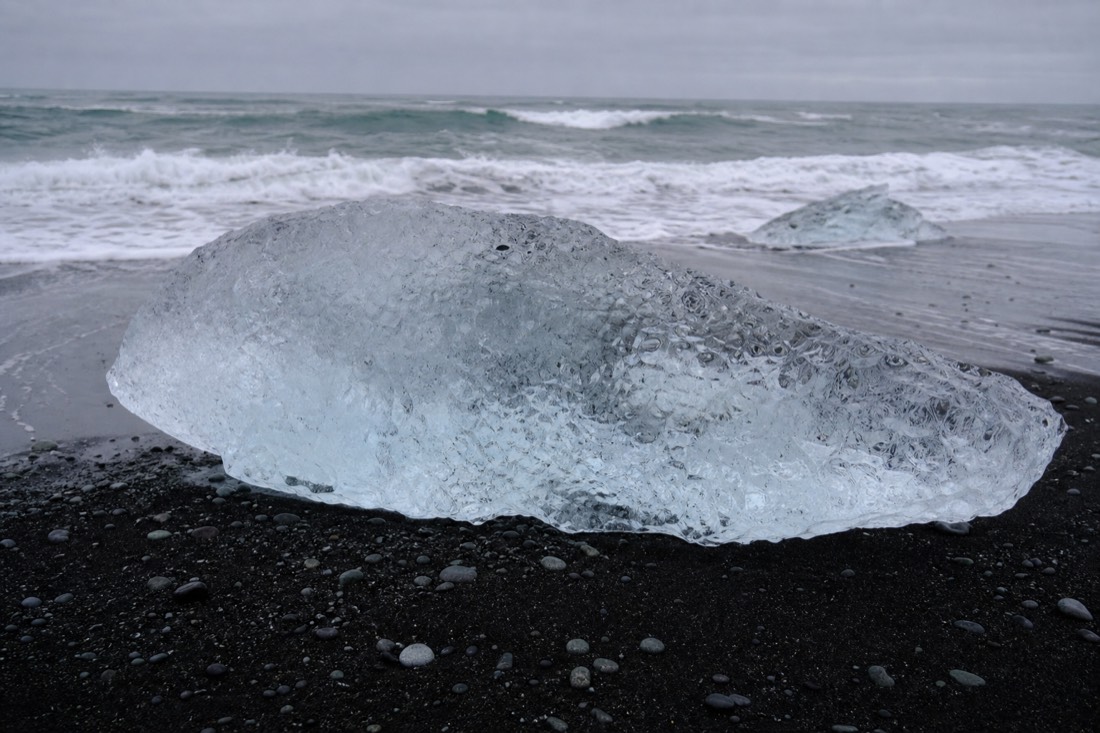
The tide rewrites the beach constantly. An incoming tide pushes fresh ice from the river mouth onto the sand and can strand big new pieces in an hour. A falling tide drags them back out. Wind direction, how recently the glacier calved, and the sea state all change what you find, so no two visits, even on the same day, look the same.
This is the thing most guides skip and the thing that decides your visit. The ice you photograph is on loan. It arrives on one tide and can be gone on the next. I have walked the beach at 9am with barely a piece in sight and returned at 2pm to find it strewn with fresh crystal, purely because the tide turned and an onshore wind did the delivering. The bergs feed in from the lagoon down the outlet channel, and the sea decides the rest.
Because of that, timing matters more than most day-trippers realise. If your visit lands on a falling tide after a calm week, the beach can be lean. If it lands on a rising tide after a big calving event, it can be spectacular. You rarely get to choose, but knowing the mechanism helps you read what you are seeing instead of feeling shortchanged.
| Conditions | What you tend to see | When it's likely |
|---|---|---|
| Rising tide | Fresh ice pushed high onto the sand, new pieces stranding | Check local tide times before you go |
| Falling tide | Ice dragged back toward the water, thinner spread | Late in a tidal cycle |
| Onshore wind after recent calving | The beach at its most loaded, big bright blocks | Windy spells, spring melt surges |
| Offshore wind, calm sea | Sparser ice, more open black sand | Settled high-pressure days |
| Deep midwinter | Fewer but often larger, slower-melting pieces | December to February |
| High-summer melt | More frequent small pieces, quicker turnover | June to August |
If you want the fuller picture on whether ice is ever guaranteed, my honest answer lives in is Diamond Beach always covered in ice. The short version is no, and anyone promising otherwise has not spent enough mornings here.
Why are some ice diamonds clear, some blue, and some black?
Colour comes down to air and time. Ice full of trapped bubbles looks white or milky. Ice compressed so hard the bubbles are squeezed out absorbs red light and glows deep blue. Streaks of black are volcanic ash, layers of old eruptions frozen into the glacier centuries ago and now revealed as the ice melts.
Once you know what the colours mean, the beach reads like a page. The crystal-clear pieces, the ones that truly look like cut glass, are the most compressed and the oldest, their air pressed almost entirely away. The milky white blocks are younger or hold more trapped bubbles, scattering light instead of bending it. The blue is the showstopper, dense glacier ice acting like a filter that swallows warm colours and throws back cold ones.
The black is my favourite to explain. Iceland is a volcanic country, and every so often an eruption dusts the glacier with ash. That ash gets buried under new snow, compressed into the ice as a dark seam, and travels a thousand years down the glacier with everything else. When that ice reaches the beach, the ash reappears as a charcoal streak or a whole soot-grey berg. You are looking at a specific volcanic winter, preserved. For getting these colours on camera, the best photography spots at Diamond Beach makes the difference between a flat snap and one that shows the blue.
| Ice colour | Why it looks that way | What to look for |
|---|---|---|
| Crystal clear | Highly compressed, almost all air squeezed out | Backlight it with low sun for the "diamond" glitter |
| Milky white | Younger ice or many trapped air bubbles | The most common pieces on an average day |
| Deep blue | Dense old ice absorbing red light | Freshly stranded, larger bergs, best in flat light |
| Black or ash-streaked | Volcanic ash layers frozen into the glacier | Dark seams running through otherwise clear ice |
How dangerous is the black sand and the water here?
More dangerous than it looks, and the calm-seeming surf is the reason. This coast gets sneaker waves, sudden surges that run far higher up the sand than the waves before them, with no warning and no lifeguards. The water is barely above freezing. Beached icebergs can roll without notice. People have died on Iceland's south-coast black beaches. Treat the shoreline with real caution.
I am blunt about this because the beauty disarms people. You are absorbed in the ice, back to the sea, phone out, and that is exactly the posture the ocean punishes. The official guidance on sneaker waves and black-beach safety at safetravel.is is not boilerplate: it exists because these surges have swept visitors off their feet and out into water that gives a body minutes, not hours. Stay well back from the waterline, never turn your back on the sea, and keep children within arm's reach at all times.
The ice carries its own trap. A beached berg looks solid and photogenic, and it is neither stable nor safe to climb. They melt unevenly, shift their weight, and can roll suddenly, pinning or crushing whatever is against them. Admire them from the sand, not from on top. The glacial meltwater is a few degrees above freezing even in summer, cold enough to cause shock in seconds, so a soaking here is not a joke, it is an emergency.
| Do | Don't |
|---|---|
| Stay well back from the waterline, always | Turn your back on the sea for a photo |
| Watch the surf for a full minute before approaching | Assume calm-looking water is safe |
| Keep children and anyone unsteady close | Let kids run toward the ice near the surf |
| Photograph icebergs from the sand | Climb, sit, or lean on a beached berg |
| Wear warm, waterproof layers and grippy footwear | Step into the water or reach for a floating piece |
None of this should scare you off. Thousands of people, including families and older travellers, have a calm, safe hour here every day. The point is simply that the danger is real and quiet, and a little respect for the water removes almost all of it. A guided coach handles the long return drive, but the same shoreline precautions still apply once you step onto the beach.
The drive from Reykjavík is long, and all visitors still need to follow the shoreline precautions above.
Is the beach always covered in ice?
No, and that is the honest catch. Some days the sand is nearly bare. The ice depends on recent glacier calving, the tide, and the wind lining up, and none of those are guaranteed on the morning you visit. Go for the place and the coastline, hope for a good ice day, and you will rarely be disappointed either way.
I have watched people deflate when the beach is lean, and it is usually because every image they saw beforehand was the beach at its absolute best. Photographers wait for those conditions or return again and again. A day-tripper gets one roll of the dice. Sometimes the tide, the wind, and a fresh calving all align and the shore is loaded with glittering blocks. Sometimes you get a wide black beach, a scatter of small pieces, and a magnificent sky. Both are the real Diamond Beach.
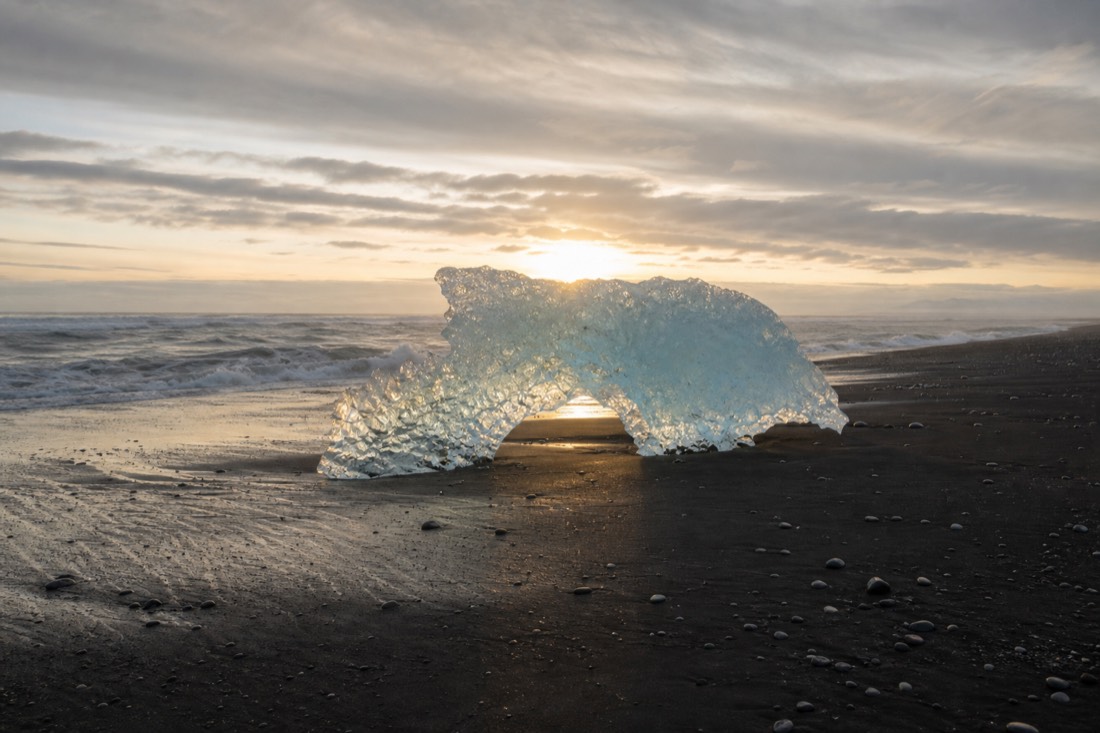
Here is what I tell my groups at the coach door. Do not measure this beach against a single photograph. Measure it against the fact that you are standing on ground-up volcano, holding your hand near ice that fell as snow before the Sagas were written, while the ocean tries to reclaim it in front of you. That framing survives a lean ice day. The photograph does not.
So, what is Diamond Beach actually like? It is a place that refuses to be the same twice. The ice is real and ancient, the colours mean something, the tide is the director, and the sea deserves your respect. Come for that, not for a specific photo, and this small black shore at the edge of Europe's largest glacier will give you something the pictures never quite manage. It is the sound of thousand-year-old ice, cracking quietly on the sand, while the Atlantic waits.
Your Next Step
Choose between the beach day trip and a local ice add-on
Initial editorial suggestion. Confirm your date and party requirements with the operator.
Have a travel date in mind? Check the Reykjavík departure, pickup option, and seasonal boat choice before arranging the rest of your South Coast day.
Ages 6+. Allow for delays. Meals are extra; glacier hiking and ice-cave visits are separate experiences.
Refine Your Choice And View Alternatives
Reykjavik: Jokulsarlon Glacier Lagoon & Diamond Beach Tour
14-hour coach trip from Reykjavík with an English-speaking guide, Jökulsárlón and Diamond Beach stops. Pickup and the seasonal boat ride depend on the booked option.
This tool compares tour formats, meeting points, listed ages, seasonal windows and duration. Seasonal guidance is not live availability. It does not confirm availability or personal suitability. Local activities do not include the drive from Reykjavík; leave extra time for travel and check-in.
Jökulsárlón: The Original Ice Cave Tour on Vatnajökull: Around 2.5–4 hours from Jökulsárlón, with an English-speaking glacier guide, modified 4x4 transport and safety equipment. Ages 10+. A cave is not guaranteed: the route may visit a blue-ice canyon, tunnel or other feature. Requires general fitness and uneven-ground walking; not suitable for mobility impairments.