Höfn, the Lobster Town Near the Glacier Lagoon
An Icelandic guide's take on Höfn, the langoustine harbour town about 80 km east of Jökulsárlón, and why it makes the best overnight base for the glacier lagoon.
 By Björn Einarsson, Iceland South Coast & glacier-lagoon tour guide and local specialist
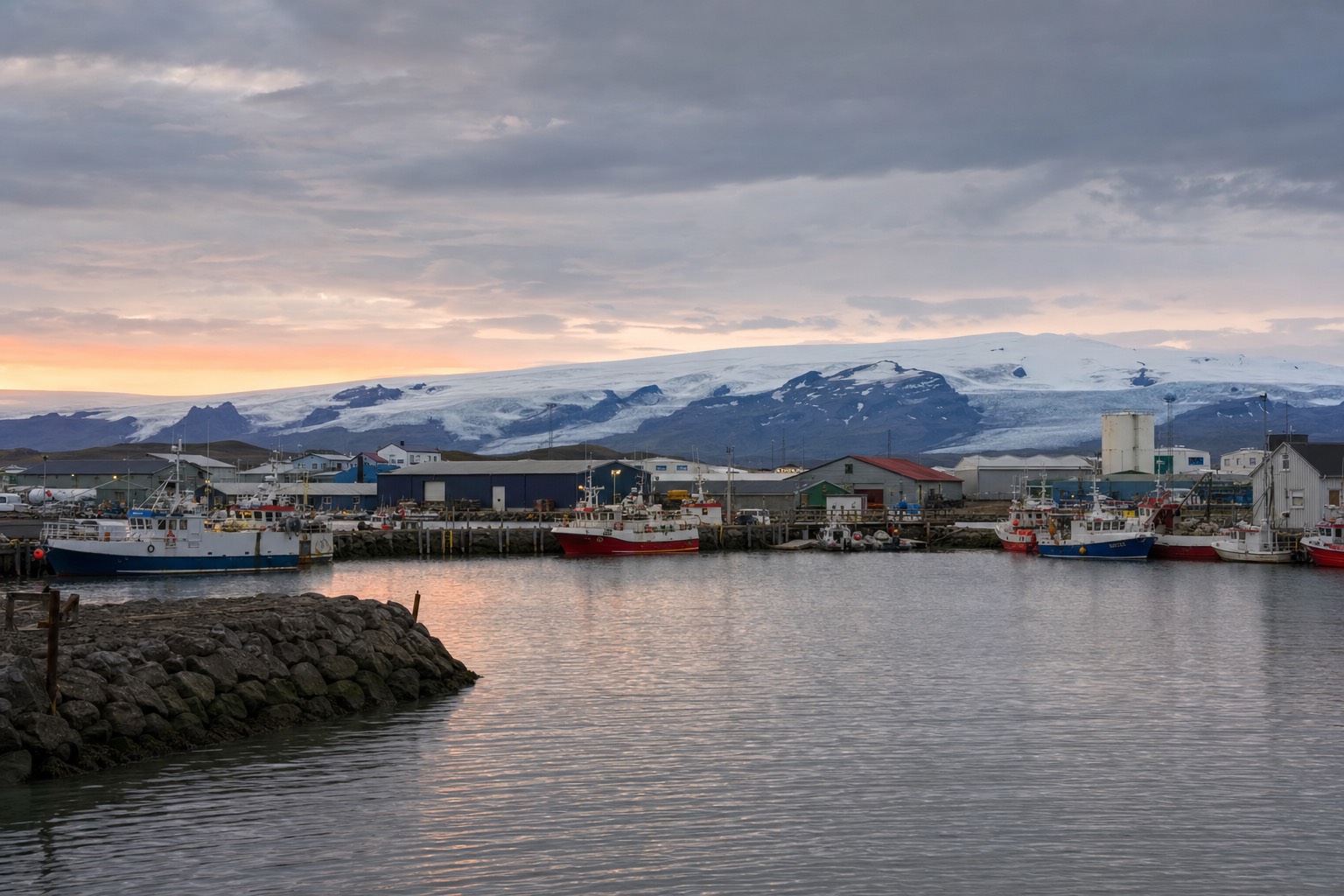
The first thing I do when I roll into Höfn is wind the window down. You catch the harbour before you see it: salt, diesel, cold seawater, and somewhere underneath all that, the faint sweet smell of langoustine cooking in butter at one of the restaurants by the water. It is a tiny place, a fishing town of around 1,800 people wrapped around a working harbour, sitting on a spit of land with the whole white wall of Vatnajökull rising behind it. Most people on the big day trip never get here. The coach turns around at the glacier lagoon and heads back west, and Höfn stays a name on a road sign about an hour further east. I think that is a shame, so let me tell you what is down there.
Why is Höfn called Iceland's lobster town?
Höfn is Iceland's langoustine capital, built around catching what Icelanders call "humar." Strictly it is langoustine, the small Norway lobster, not the big clawed lobster tourists picture, but the town has fished it for generations and turned it into an identity. Order it in Höfn and you are eating the local catch.
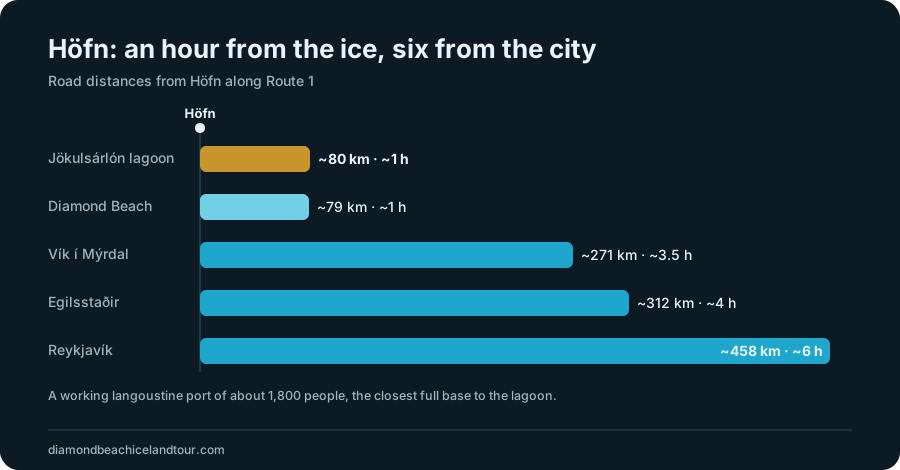
Here is the honest bit of pedantry, because I get asked about it at the lagoon all the time. The Icelandic word humar refers to Nephrops norvegicus, the langoustine or Norway lobster. It has slim claws and sweet tail meat, and it is a cousin of the lobster rather than the same animal. Menus translate it as "lobster" because that sells better in English, and I understand why, but a visitor expecting a great clawed New England lobster will get a surprise. What they get instead is arguably better: langoustine tails, pan-fried in garlic butter, pulled from cold water a few hundred metres from the plate.
The town leans into it. The harbour is still a real working port, not a set dressed for tourists, and the langoustine boats are part of daily life. When you sit down to a langoustine soup or a plate of tails in Höfn, you are eating the thing the town is named for in the local imagination. That connection between the place and the food is rare in Iceland, where a lot of restaurants serve the same imported menu. Höfn has a dish that is genuinely its own.
What is there to do in Höfn?
Höfn rewards a slow evening more than a packed itinerary. Walk the harbour, eat langoustine, watch the light change on Vatnajökull, and drive out to the Stokksnes peninsula just east of town for its black-sand views of Vestrahorn. It is a base for the glacier region, not a checklist of attractions, and that is the appeal.
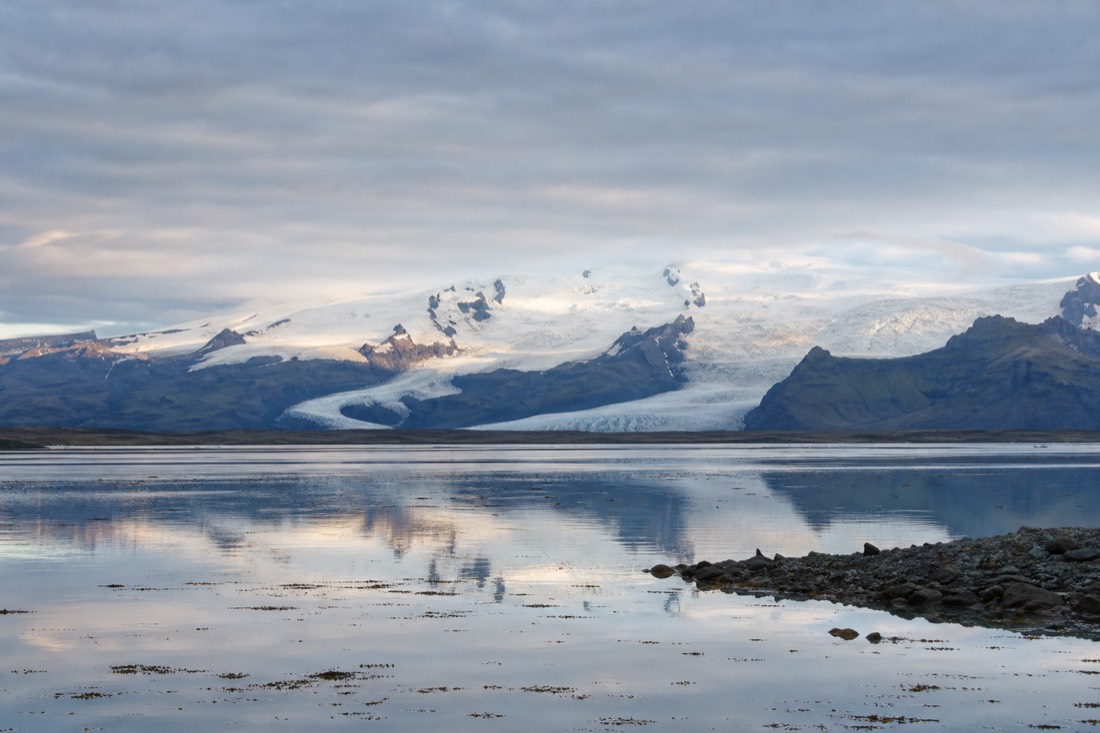
Do not come expecting a busy town centre, because there is not one. What Höfn has is atmosphere and position. The harbour walk at dusk is the thing I send everyone to do first: the boats, the birds, the reflection of the ice cap on still water. Just east of the town, a short hop off Route 1, the Stokksnes headland gives you Vestrahorn, that jagged black mountain rising straight out of a black beach, which is one of the most photographed spots in the country for a reason.
The real activity, though, is using Höfn as a springboard. From here you are inside the Vatnajökull region rather than five hours from it. If you want to understand what sits behind the town, the official Vatnajökull National Park pages lay out the glacier tongues and hiking areas, and I go deeper on whether that western park hub earns a stop in is Vatnajökull and Skaftafell worth visiting.
| In and around Höfn | What it is | Rough time |
|---|---|---|
| Harbour walk | The working fishing port at dusk, ice cap behind it | 45 min |
| Langoustine dinner | The local humar, the reason to be here | 1.5–2 h |
| Stokksnes / Vestrahorn | Black-sand peninsula and the famous mountain, just east | Half a day |
| Glacier-tongue viewpoints | Vatnajökull outlets on the drive in and out | As you pass |
| Jökulsárlón and Diamond Beach | The glacier lagoon, an hour west | Half to full day |
How far is Höfn from Jökulsárlón and the glacier lagoon?
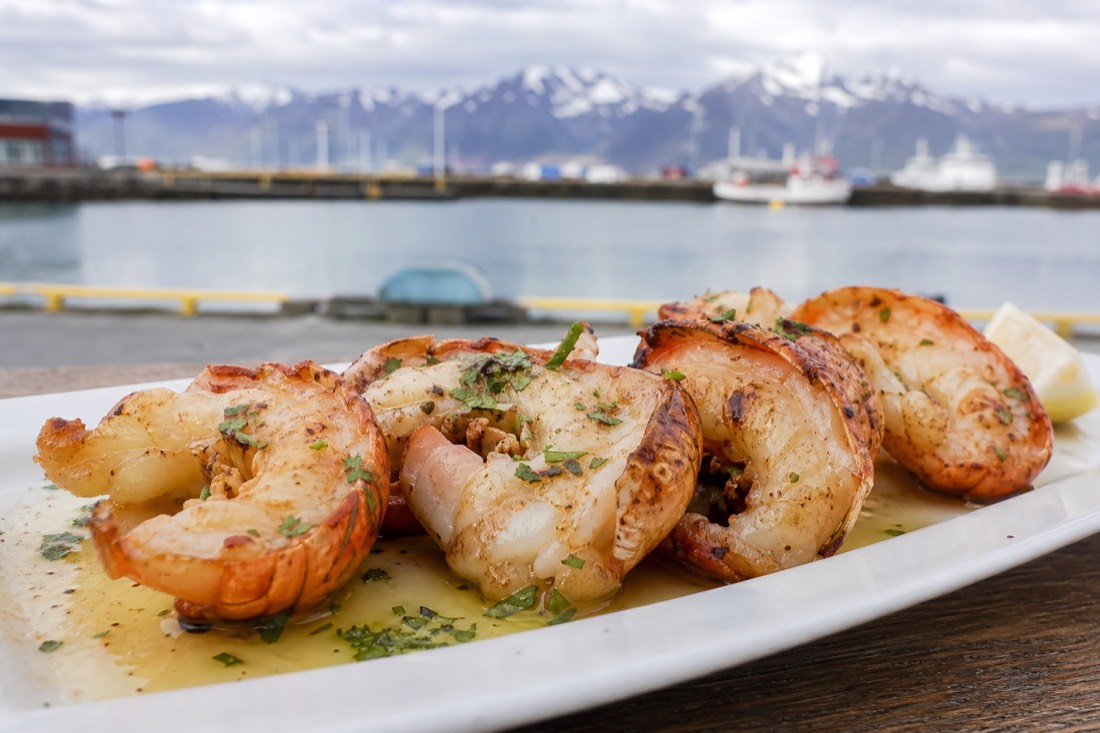
Höfn sits about 80 km east of Jökulsárlón, roughly an hour's drive on Route 1, with Diamond Beach beside the lagoon at almost the same distance. From Reykjavík it is around 458 km, close to six hours, which is exactly why splitting the trip and sleeping out east changes the whole day.
That 80 kilometres is the number that matters. When you stand at the glacier lagoon on a Reykjavík day tour, you are at the far end of a very long tether, and the coach has to start hauling you back almost as soon as you arrive. From Höfn, the same lagoon is a relaxed morning drive. You can be at Jökulsárlón for the soft early light before the tour coaches roll in from the capital, then have the whole rest of the day.
Distances out here are deceptive because everything is spread along one road. Here is how Höfn sits relative to the places people actually ask about, using real road distances rather than map guesses.
| From Höfn to | Road distance | Approx drive |
|---|---|---|
| Jökulsárlón Glacier Lagoon | ~80 km | ~1 h |
| Diamond Beach (beside the lagoon) | ~79 km | ~1 h |
| Vík í Mýrdal | ~271 km | ~3.5 h |
| Egilsstaðir (east Iceland) | ~312 km | ~4 h |
| Reykjavík | ~458 km | ~6 h |
Look at the gap between the top two rows and the bottom one. The lagoon is an hour away; Reykjavík is six. That single fact is the entire argument for the town. If you are weighing where to put your head down for the night, I lay out the full set of options in where to stay near Jökulsárlón, and Höfn is usually the most complete pick because it has the restaurants and beds the hamlets closer to the ice do not.
When is the Humarhátíð lobster festival in Höfn?
Humarhátíð, the Höfn Lobster Festival, runs on a summer weekend, typically late June or the start of July. In 2024 it fell on 27 to 30 June. It is a small-town celebration of the langoustine catch: food stalls, music, and the harbour turned over to a party. If your trip lands on that weekend, plan around it.
This is the one time the quiet town is not quiet. Humarhátíð has been the highlight of Höfn's summer for decades, a proper Icelandic bæjarhátíð where the whole community and half the region turns up to eat langoustine and stay out under a sky that never really goes dark. Music, market stalls, families, the works. It is the kind of thing you cannot plan a trip around from abroad, but if you happen to be passing through southeast Iceland on the right weekend, it is a genuine reason to book a bed in town rather than drive on.
A practical word of warning that comes with it. Höfn is small, and festival weekend fills every room for miles. If your dates overlap with Humarhátíð, book accommodation early or you will find yourself driving back toward the lagoon at midnight looking for a vacancy. The festival is a joy; the last-minute room hunt around it is not.
Is it worth staying overnight in Höfn?
For anyone with three days or more in Iceland, yes. An overnight in Höfn turns one brutal 14-hour round trip from Reykjavík into two calm halves, buys you sunrise light at the glacier lagoon before the crowds, and hands you a langoustine dinner and a real harbour town at the end of the driving. On a short trip, the guided day tour still wins.
I want to be even-handed, because this genuinely splits by how long you have. If Iceland is a four-day dash and the glacier lagoon is the one far-flung thing you want, an overnight out east eats a night you cannot spare, and the guided coach from Reykjavík is the smarter tool. It swallows the whole 14-hour day so you do not have to drive it, and it gets you there and back in one shot. That is a real, honest recommendation for a lot of visitors.
But if you have the days, the overnight is the quiet upgrade almost nobody plans and almost everybody who does it raves about afterwards. Here is the trade laid out plainly.
| Reykjavík day trip | Overnight in Höfn | |
|---|---|---|
| Driving in one go | ~10–12 h round trip | Two relaxed half-days |
| Time at the lagoon | ~1.5 h, midday | Early light, on your clock |
| Crowds at Jökulsárlón | Peak coach hours | Beat them at sunrise |
| Dinner | A roadside stop | Langoustine in a harbour town |
| Cost | Tour price only | Plus a night's lodging |
| Best for | Short trips, no car | 3+ day itineraries |
If you are giving Höfn the night, these are the town's main beds, from the full-service hotels to the harbour guesthouse:
Hótel Höfn Check rates ›
Fosshotel Vatnajökull Check rates ›
Milk Factory guesthouse Check rates ›
If your trip is short and the winter roads make you uneasy, do not overthink it: book the guided Jökulsárlón & Diamond Beach day trip and check live availability and prices on GetYourGuide to see which dates are still open. It exists precisely so you can reach the lagoon without solving the overnight logistics yourself.
If you do have the time, the sums change once you add a hotel night, and I break down how the numbers actually stack up in how much a Jökulsárlón day trip really costs. The overnight is not free, but for what it does to the pace of the trip, plenty of people find it the best money they spend on the south coast.
A little history, and why the town is here at all
Höfn means "harbour," and that is the whole story of the place. It grew from a trading post set up in 1897 into a fishing port, gained municipal status in 1988, and has stayed a working town of around 1,800 people ever since. It exists because the sea gave it a living, and the langoustine is the clearest piece of that inheritance.
You feel the smallness the moment you arrive, and it is part of what makes the town honest. There is no old quarter to wander, no cathedral, no museum quarter. The name says exactly what it is, a harbour, and the merchant Ottó Tuliníus who set up shop here in 1897 would still recognise the shape of the place. The population figures and founding story sit on the town's Wikipedia entry if you want the detail, but the short version is that Höfn has always earned its keep from the water.
That matters for a visitor because it means the langoustine on your plate is not a marketing invention. The town fished humar long before anyone was driving out to photograph icebergs, and the harbour you walk at dusk is the same one that has fed it for over a century. You are eating and sleeping in a real place that happens to sit an hour from one of the most extraordinary sights in the country. That combination, a genuine working town beside a world-class glacier lagoon, is exactly why I keep telling people to drive the extra hour east.
So is Höfn worth the extra hour east?
If you only have a few days, take the guided coach to the lagoon and let it bring you home, and do not feel you have missed much: the day tour is built for exactly that trip. But if you have the time to slow down, Höfn is the piece of southeast Iceland that most itineraries leave out and most travellers wish they had not. An hour from the ice, a plate of langoustine pulled from the harbour below your window, and the whole of Vatnajökull glowing behind the boats at dawn. Drive the extra hour. The town earns it.
Your Next Step
Match by starting point, available time and preferred ice experience
Initial editorial suggestion. Confirm your date and party requirements with the operator.
Have a travel date in mind? Check the 14-hour Reykjavík lagoon coach before arranging a separate overnight or rental-car day.
Ages 6+. Allow for delays. Meals are extra; glacier hiking and ice-cave visits are separate experiences.
Refine Your Choice And View Alternatives
Reykjavik: Jokulsarlon Glacier Lagoon & Diamond Beach Tour
14-hour coach trip from Reykjavík with an English-speaking guide, Jökulsárlón and Diamond Beach stops. Pickup and the seasonal boat ride depend on the booked option.
This tool compares tour formats, meeting points, listed ages, seasonal windows and duration. Seasonal guidance is not live availability. It does not confirm availability or personal suitability. Local activities do not include the drive from Reykjavík; leave extra time for travel and check-in.
Jökulsárlón: Vatnajökull Glacier Guided Hiking Tour: A 4.5-hour outing from Jökulsárlón onto Breiðamerkurjökull, with an English-speaking glacier guide, Super Jeep transfer and glacier equipment. Ages 10+. A 4–6 km walk, medium difficulty; crampons fit EU 35–48. Pregnancy, heart conditions, recent surgery, low fitness or access needs require a different plan.
Jökulsárlón: The Original Ice Cave Tour on Vatnajökull: Around 2.5–4 hours from Jökulsárlón, with an English-speaking glacier guide, modified 4x4 transport and safety equipment. Ages 10+. A cave is not guaranteed: the route may visit a blue-ice canyon, tunnel or other feature. Requires general fitness and uneven-ground walking; not suitable for mobility impairments.