Is Vatnajökull National Park & Skaftafell Worth Visiting?
The wider park around the lagoon, and whether the extra hour west earns its place in your plan.
 Written with Björn Einarsson, Iceland South Coast & glacier-lagoon tour guide and local specialist
Short answer
Yes, if you have a spare day. Skaftafell, the hiking hub of Vatnajökull National Park, sits about an hour west of Jökulsárlón and gives you Svartifoss, glacier-tongue walks and guided ice hikes. But the standard lagoon day trip does not include Skaftafell, so plan it as its own outing.
Most people come to this corner of Iceland for the lagoon and never realise they are standing at the edge of something far larger. Jökulsárlón is one small drainage point of a glacier so big it has its own weather. Drive west for an hour and the ice cap climbs out of the flat coastal plain into a wall of white that runs to the horizon, and tucked under it sits Skaftafell, a pocket of birch scrub, black basalt and glacier tongues that feels like a different country from the beach you left behind. I have guided this stretch of road in both directions more times than I can count, and the question travellers ask me most is whether the park beyond the lagoon is worth the extra time. Here is my honest answer.
Is Vatnajökull National Park and Skaftafell worth visiting?
If you have a spare day or a night on this coast, yes, clearly. Skaftafell is the park's hiking heart, about an hour west of Jökulsárlón, with the basalt-columned Svartifoss waterfall, easy glacier-tongue walks and guided ice hikes. If you only have the one long lagoon day, though, it will not fit, and that is fine.
For most visitors the guided glacier walk is the highlight of a Skaftafell day, and it is the one thing here you cannot safely do alone. If you want it, check dates and price for the small-group Skaftafell glacier hike here before you commit the day.
The thing to be clear about from the start is scale and time. Vatnajökull National Park is one of the largest national parks in Europe, and Skaftafell is just its most accessible western gateway. You cannot bolt a proper Skaftafell visit onto a Jökulsárlón coach day and expect to hike Svartifoss too. The standard lagoon day trip is already close to fourteen hours door to door, and it drives past the Skaftafell turnoff without stopping.
So the real decision is not "is Skaftafell good" (it is, genuinely) but "do I have room for it". If your Iceland trip gives you a second day down here, or a night in the area, Skaftafell rewards you with a completely different kind of experience: less standing and staring, more walking under the glacier. If it does not, you lose nothing by making the lagoon and Diamond Beach your focus and saving the park for a return trip.
What actually is Vatnajökull, and why does it matter?
Vatnajökull is Europe's largest glacier by volume, an ice cap covering around 7,700 square kilometres, roughly 8 percent of Iceland's whole surface. Jökulsárlón, Diamond Beach, Skaftafell and dozens of outlet glaciers are all just edges of this one enormous body of ice. Understanding that changes how the whole region reads.
When you stand at the lagoon, the glacier tongue closing off the far end is called Breiðamerkurjökull, and it is only one of many outlets spilling down from the ice cap. The same Vatnajökull feeds Svínafellsjökull and Skaftafellsjökull near Skaftafell, along with many other outlet glaciers and the meltwater rivers that carve the black sand plains you drive across. According to the Vatnajökull entry on Wikipedia, the ice sits hundreds of metres thick over active volcanoes, which is exactly why the national park won its UNESCO listing for the meeting of fire and ice.
That is the mental shift I try to give travellers on the coach. The lagoon is not a standalone attraction, it is a window into a landscape that keeps going for kilometres in every direction. Once you see the region as one glacier with many faces, a day at Skaftafell stops feeling like a detour and starts feeling like the other half of the story.
What is there to do at Skaftafell?
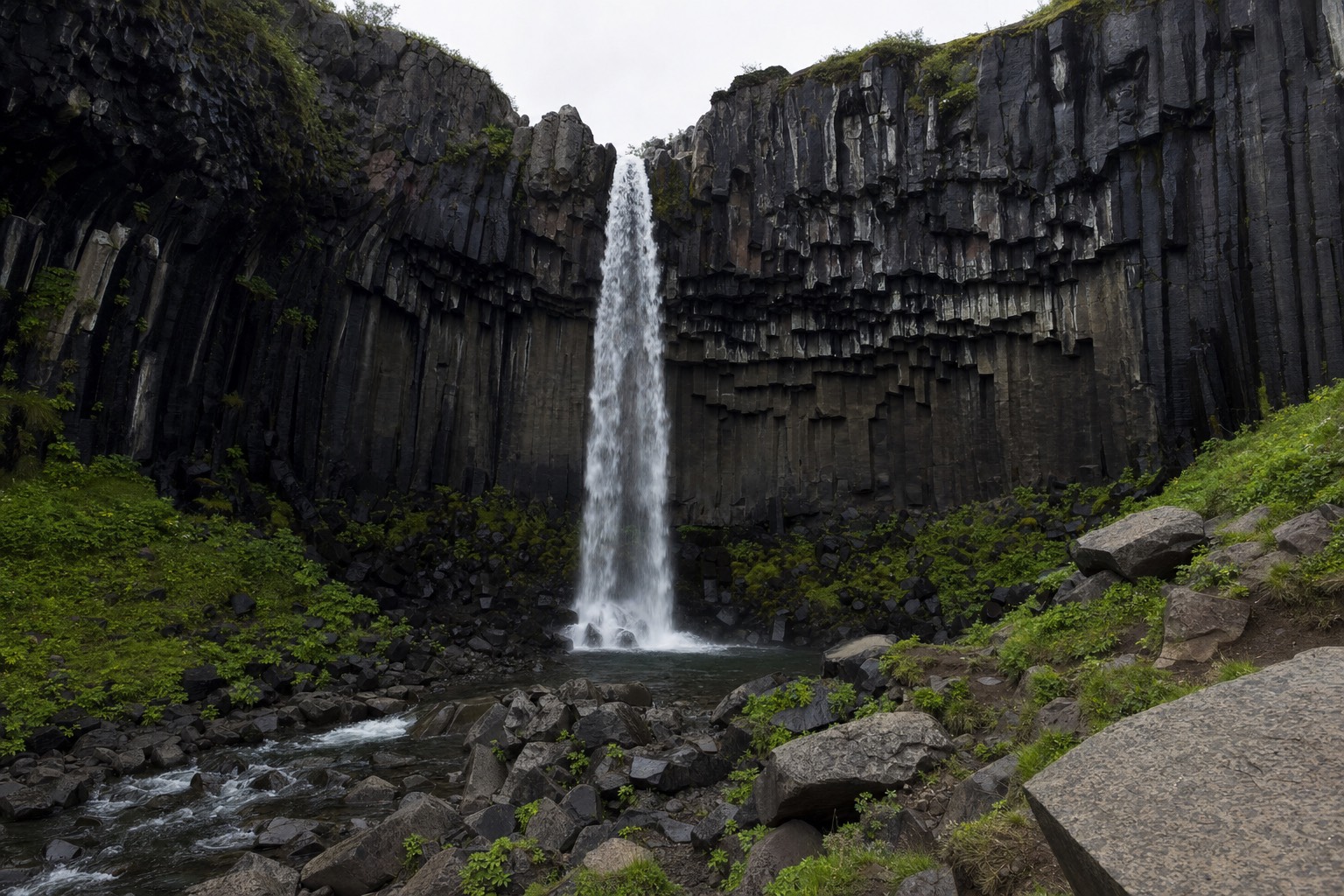
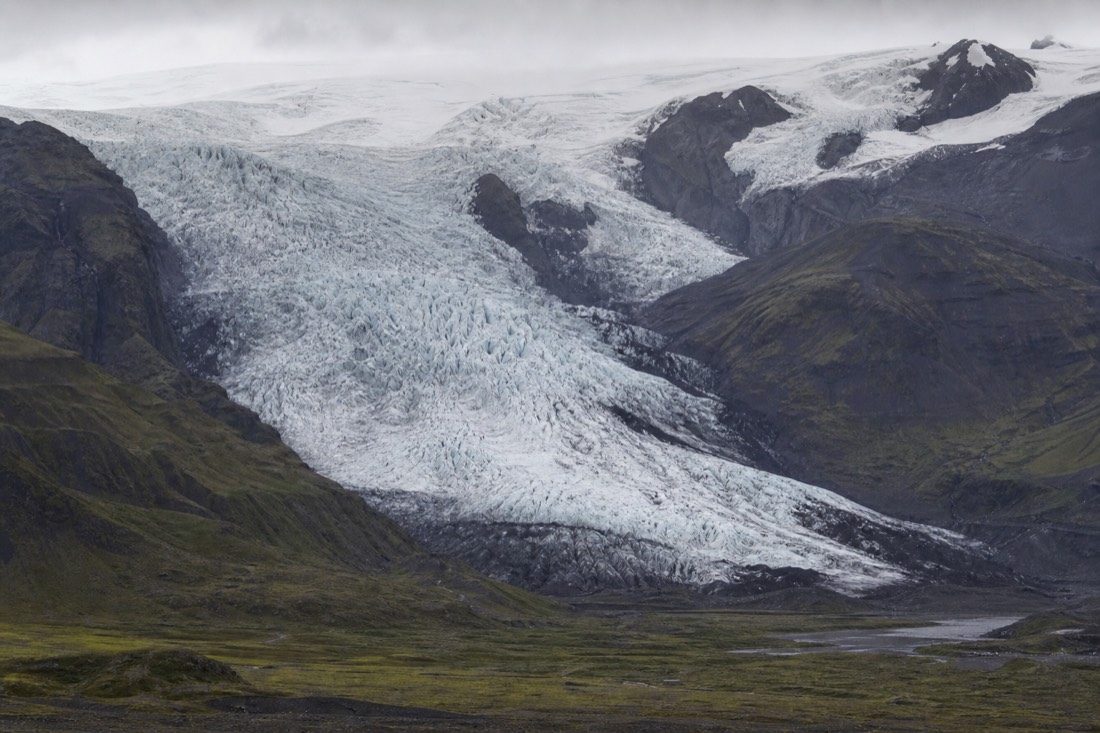
Skaftafell is the walking hub of the park. The signature short hike climbs to Svartifoss, a waterfall framed by dark hexagonal basalt columns, in a round trip of roughly an hour to ninety minutes. Easy flat trails reach the Skaftafellsjökull glacier tongue, and guided glacier hikes and ice-cave walks launch from here with certified operators.
The Svartifoss walk is the one nobody regrets. It is a moderate climb of a couple of kilometres each way from the visitor centre, and the payoff is a slim waterfall pouring over a curtain of black basalt columns that inspired parts of Reykjavík's Hallgrímskirkja church. Give it an hour and a half with photo stops.
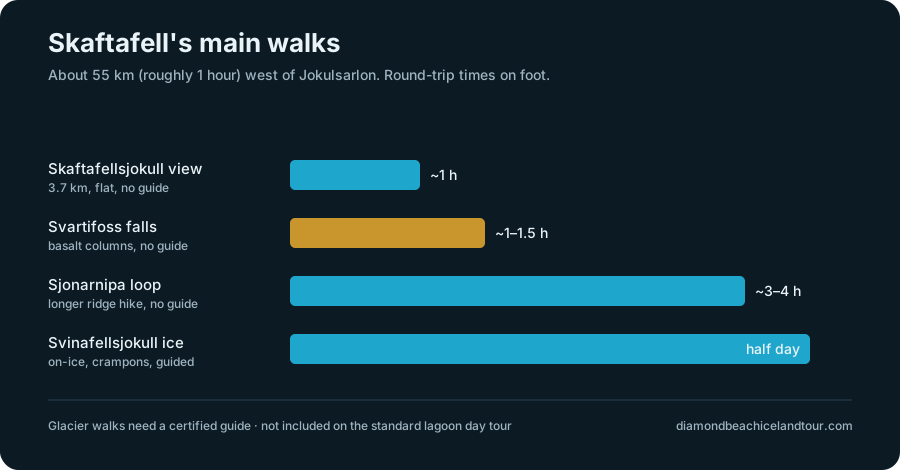
If you want the glacier without the climb, the walk out to Skaftafellsjökull is gentler: a mostly flat round trip of about 3.7 kilometres, an hour or so, ending at a viewpoint where the glacier tongue meets its own small lagoon. It is the easiest close-up glacier view in the park. For anything on the ice itself, you need a guide. Svínafellsjökull nearby is a common launch point for glacier hikes, and I break the options down in the guide to the best glacier hike near Jökulsárlón. Never walk onto a glacier tongue alone; crevasses hide under thin snow, and the park and safetravel.is are firm that ice walks happen only with certified guides.
| Skaftafell highlight | Type | Round-trip time | Guide needed? |
|---|---|---|---|
| Svartifoss waterfall | Basalt-column hike, moderate | ~1 to 1.5 hours | No |
| Skaftafellsjökull viewpoint | Easy flat glacier-tongue walk | ~1 hour (3.7 km) | No |
| Sjónarnípa viewpoint loop | Longer ridge hike | ~3 to 4 hours | No |
| Svínafellsjökull glacier hike | On-ice walk with crampons | Half day | Yes, certified |
| Guided ice-cave walk (winter) | On/under-glacier, seasonal | Half day | Yes, certified |
How far is Skaftafell from the glacier lagoon, and what else is out there?
Skaftafell lies about 55 kilometres west of Jökulsárlón, roughly an hour's drive back toward Reykjavík on Route 1. Between the two you pass Fjallsárlón, a smaller sister lagoon, and Svínafellsjökull. Everything sits strung along the ring road at the foot of the ice cap, which is why distances matter when you plan.
The important point for anyone building an itinerary is direction. Skaftafell is not past the lagoon, it is on the way there from Reykjavík, so on the standard day tour you drive right by it in both directions. If you were self-driving and wanted both, you would ideally stop at Skaftafell first, carry on to the lagoon and Diamond Beach, then turn for home. Doing the lagoon and then backtracking an hour to Skaftafell is what eats people's daylight.
Here is how the main park sites lay out from Jökulsárlón, so you can see what a day realistically holds.
| Park site | Direction from lagoon | Distance / time | What it offers |
|---|---|---|---|
| Diamond Beach | Adjacent | Across the road | Icebergs on black sand |
| Fjallsárlón | West | ~10 km, ~10 min | Smaller, quieter lagoon under the glacier |
| Svínafellsjökull | West | ~45 km, ~40 min | Glacier-hike launch point, viewpoint |
| Skaftafell visitor centre | West | ~55 km, ~1 hour | Svartifoss, glacier walks, trails |
| Höfn | East | ~80 km, ~1 hour | Harbour town, langoustine, base for the east |
Can you fit Skaftafell into the standard Jökulsárlón day tour?
No, and this is the honest catch. The full-day coach tour from Reykjavík is built around the lagoon and Diamond Beach, with stops at Seljalandsfoss and Vík on the way. It does not include Skaftafell hiking, and there is no daylight left to add it. Skaftafell needs its own day, ideally with a night on the coast.
I want to be straight about this because the two get blurred online. The bookable Reykjavík day trip is roughly fourteen hours as it stands, and every one of those hours is accounted for by driving and the headline stops. Squeezing in a Svartifoss hike would mean either skipping the lagoon boat window or getting home at two in the morning. So the day tour and Skaftafell are two different trips, not one.
That does not make the day tour lesser. For a first visit with limited time, the lagoon and Diamond Beach are the icons you came for, and the guided coach carries the long, weather-exposed drive so you arrive fresh. If that is your plan, book the guided Jökulsárlón & Diamond Beach day trip and check live availability and prices on GetYourGuide. Then, if the park pulls at you, come back for Skaftafell on its own terms.
Should you do the park as a day trip or stay overnight?
If Skaftafell matters to you, stay at least one night in the area rather than day-tripping the whole park from Reykjavík. An overnight lets you hike Svartifoss in the morning, see the lagoon in good light, and skip five hours of driving each way. Day-tripping the park from the capital is possible but punishing.
The maths is simple. Reykjavík to Skaftafell is close to four and a half hours one way, and the lagoon another hour past that. Trying to do the park properly and return the same day means eleven or twelve hours in a vehicle for a couple of hours on foot. It works if you must, but you will spend the day tired and rushed.
An overnight changes everything. Base yourself near Skaftafell, Hof or Höfn, and you can walk to Svartifoss without a crowd, catch Skaftafellsjökull in the flat morning light, and drive the short hop to the glacier lagoon itself whenever the weather looks best. Best hiking conditions run from June into September, when the trails are dry and the daylight is long. I go through the practical options in the guide to where to stay near Jökulsárlón, and the same bases serve the park.
| Approach | Driving load | Time on foot in the park | Best for |
|---|---|---|---|
| Lagoon day tour from Reykjavík | ~14 h round trip | None (park not included) | First-timers, no car, one big day |
| Self-drive park day trip from Reykjavík | ~11 to 12 h round trip | ~2 hours, rushed | Determined drivers, long summer days |
| Overnight near Skaftafell / Höfn | Short local hops | Half to a full day | Anyone who wants Svartifoss + glacier walks |
| Multi-day South-East loop | Spread over days | Multiple hikes | Photographers, hikers, ice-cave season |
What should you know before hiking in the park?
Skaftafell's marked trails are well kept and safe in summer, but the glaciers are not casual terrain. Stay on paths near glacier tongues, keep well back from crumbling ice edges and river banks, and never step onto a glacier without a certified guide. In winter, check road and weather conditions before you set out.
The visitor centre is your friend here. It has maps, current trail conditions and rangers who will tell you honestly what is open, and the official Vatnajökull National Park pages for Skaftafell list the marked routes and their grades. There is a parking fee at the visitor centre, around 1,110 ISK for a car when I last checked, which goes toward maintaining the trails.
Weather is the real variable, especially outside summer. Route 1 through this region is exposed, and conditions can turn fast. Before any off-season drive to the park, I check the forecast at the Met Office and the road status, and if the driving worries you, that is exactly the argument for keeping your first visit to the guided lagoon coach and saving Skaftafell for a settled-weather return. The park is spectacular, but it rewards patience and the right day far more than a forced one.
Your Next Step
Choose by route, age and activity level
Initial editorial suggestion. Confirm your date and party requirements with the operator.
Have your Skaftafell date in mind? Check the Falljökull hike schedule before arranging the drive, accommodation and the rest of your park day.
Ages 8+. Minimum crampon shoe size EU 34. Not suitable for limited mobility. Boots may be rented; meals and hotel pickup are not included.
Refine Your Choice And View Alternatives
Skaftafell: Extra-Small Group Glacier Hike
Three-hour Falljökull outing from Skaftafell Airport with an English-speaking certified guide, 4x4 transfer and glacier equipment. Maximum eight participants.
This tool compares tour formats, meeting points, listed ages, seasonal windows and duration. Seasonal guidance is not live availability. It does not confirm availability or personal suitability. Local activities do not include the drive from Reykjavík; leave extra time for travel and check-in.
Reykjavik: Jokulsarlon Glacier Lagoon & Diamond Beach Tour: 14-hour coach trip from Reykjavík with an English-speaking guide, Jökulsárlón and Diamond Beach stops. Pickup and the seasonal boat ride depend on the booked option. Ages 6+. Allow for delays. Meals are extra; glacier hiking and ice-cave visits are separate experiences.
Jökulsárlón: The Original Ice Cave Tour on Vatnajökull: Around 2.5–4 hours from Jökulsárlón, with an English-speaking glacier guide, modified 4x4 transport and safety equipment. Ages 10+. A cave is not guaranteed: the route may visit a blue-ice canyon, tunnel or other feature. Requires general fitness and uneven-ground walking; not suitable for mobility impairments.